Multichannel Outbound Sequence Structure for Cold B2B Outreach
Structure your cold outreach across three channels in deliberate sequence, not simultaneous chaos.
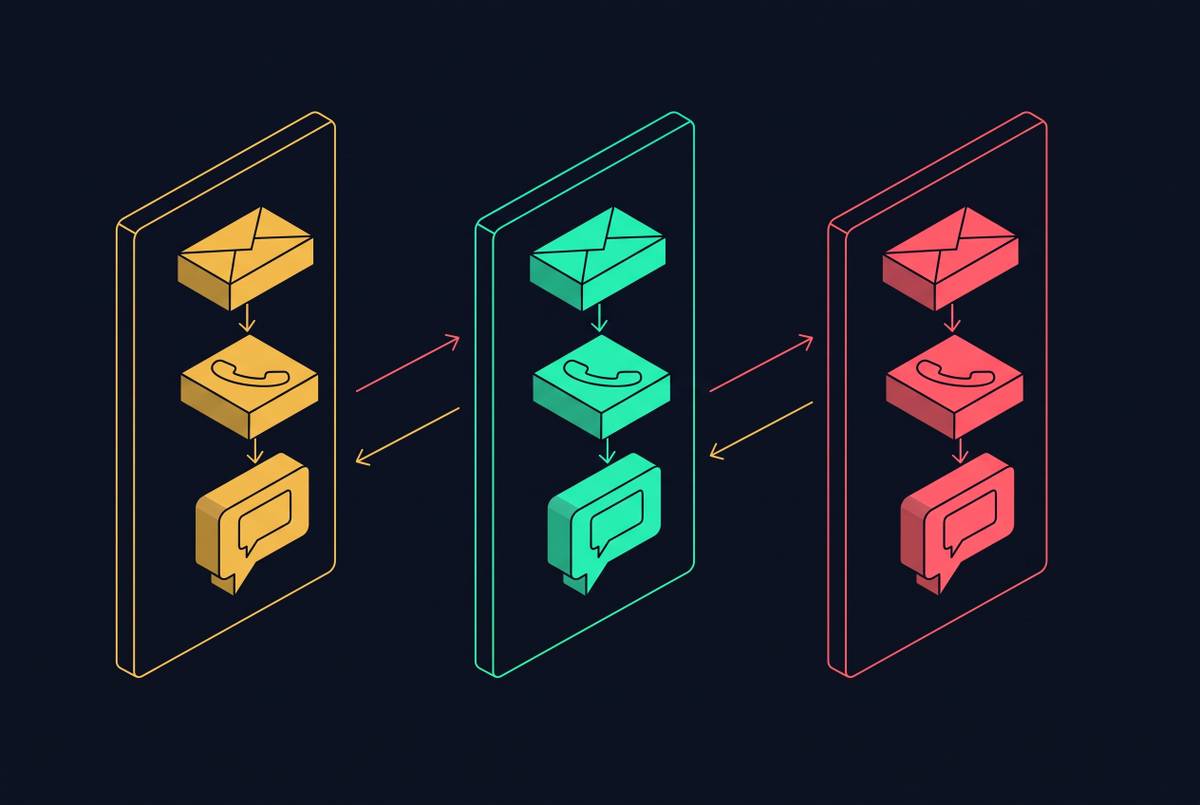
Multichannel sequencing works because attention compounds across channels in a way a single channel cannot replicate on its own. A prospect who sees a LinkedIn profile view before receiving a cold email reads that email differently: the name is already familiar, the notification has already planted a trace of recognition, and the email lands against that backdrop. Each touch changes how the next one gets received, and that is the entire mechanism multichannel sequencing is built to exploit.
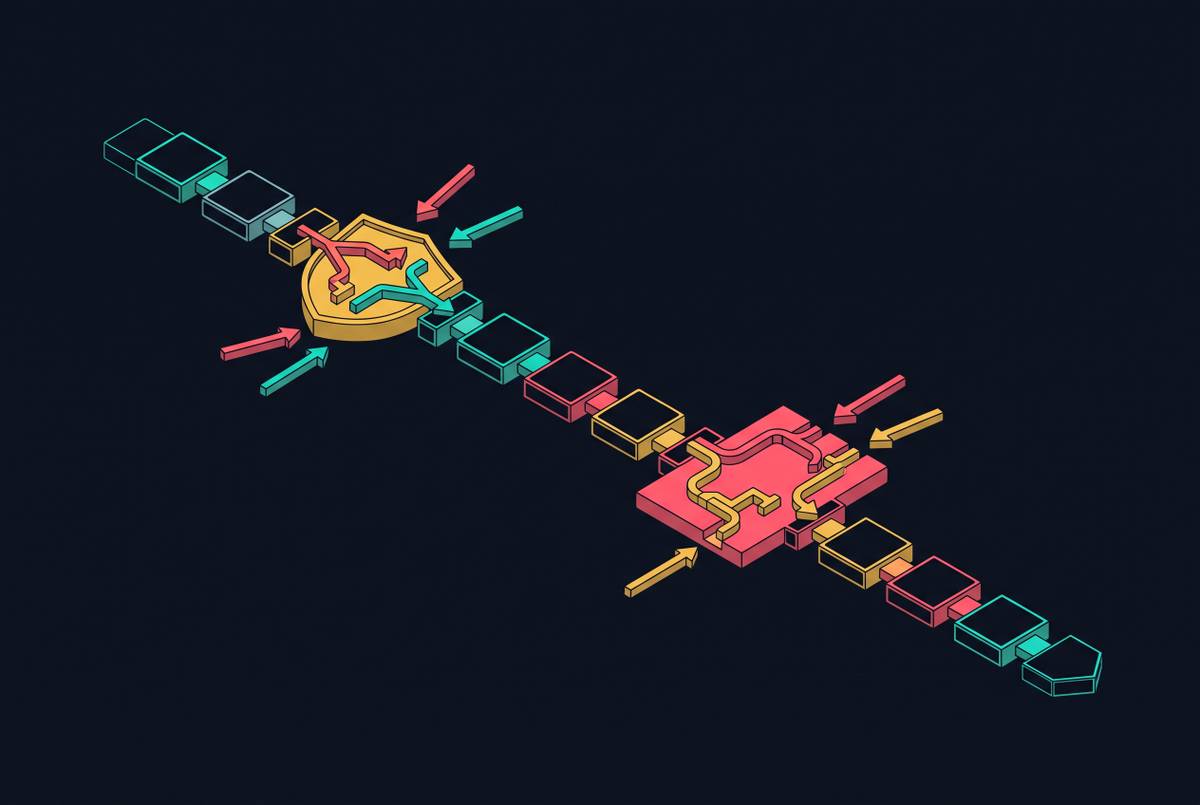
This is why cold outreach in 2026 functions as a continuous, coordinated motion across at least three channels per prospect, rather than a campaign with a start date and an end date. A sales team that already sends email and makes calls has not solved this problem by virtue of using multiple channels. Running email and phone without a designed order and timing between them is uncoordinated activity, not a sequence, and it forfeits the compounding effect that comes from one touch deliberately priming the next. The sequence structure itself, the order, the spacing, the reason each channel fires when it does, is what produces the compounding. Without that structure, multiple channels just produce multiple unconnected interruptions.
What makes a sequence a sequence: the difference between a cadence and a series of touches
A cadence is the timing philosophy, the rhythm that governs how fast or slow touches land. A sequence is the specific, planned series of touchpoints built for a particular audience and a particular goal. HubSpot's 2026 sales sequence guide draws this line explicitly: the cadence sets the tempo, and the sequence executes it. An organization can run one cadence philosophy across several different sequences, a cold outreach motion, an event follow-up motion, a re-engagement motion, each with its own touches but the same underlying tempo logic.
Conflating the two produces sequences where individual steps have no clear job and no way to measure whether they succeeded. Before a single channel or timing decision gets made, the builder has to answer two questions: who is this sequence for, and what single outcome is it driving toward. Joey Gilkey, CEO of TitanX, frames it this way in HubSpot's guide: "We start with the outcome, not the activity. The outcome is a high-quality conversation. This means we first define the ideal customer profile and the trigger that makes outreach timely. Without clarity on who and why now, no sequence performs." A sequence aimed at something as vague as "generating pipeline" is a wish rather than a sequence, because a wish gives no way to tell when a step has worked or failed. That same clarity determines when the sequence ends: not when a rep runs out of ideas, but when the prospect responds, books a meeting, or reaches the end of the arc the sequence was designed to run.
Before the sequence starts: ICP definition and signal-based trigger selection
A sequence can only perform as well as the list it runs against and the timeliness of the reason behind it. No amount of structural refinement in channel order or timing corrects for a poorly scoped ICP or an outreach motion with no real trigger behind it. Signal-based triggers give outreach a reason to exist. A leadership change, a new VP of Revenue Operations hired recently, means that person is actively evaluating their tech stack, and that alone makes an email timely. Public companies telegraph their own priorities on earnings calls, and a CEO mentioning "sales efficiency" hands outreach a direct hook. Hiring patterns matter in both directions, since headcount growth and headcount contraction both open relevant angles. Funding rounds shape the pitch itself, since the stage of funding, Series B against Series D, changes what a company is likely trying to solve. Strategic initiatives, new product launches, market expansions, and M&A activity round out the set of signals worth building outreach around.
Tight ICP cohorts, 50 contacts or fewer per segment, outperform broad blasts by a substantial margin according to B2B Outreach Benchmarks, which places list discipline inside the sequence architecture itself rather than treating it as a separate marketing function. Manual signal research does not scale. Toggling between LinkedIn, Google News, SEC filings, and company websites can take up to an hour per account, and tools that consolidate that research, platforms like Salesmotion, cut that time substantially and make signal-anchored outreach viable across a full prospect list. ICP work also sets the channel logic that the rest of the sequence depends on: senior buyers and executives tend to respond to the phone, while more junior personas lean digital, and that weighting needs to be decided at the ICP stage rather than improvised once the sequence is already running.
Assigning a Role to Each Channel in the Sequence
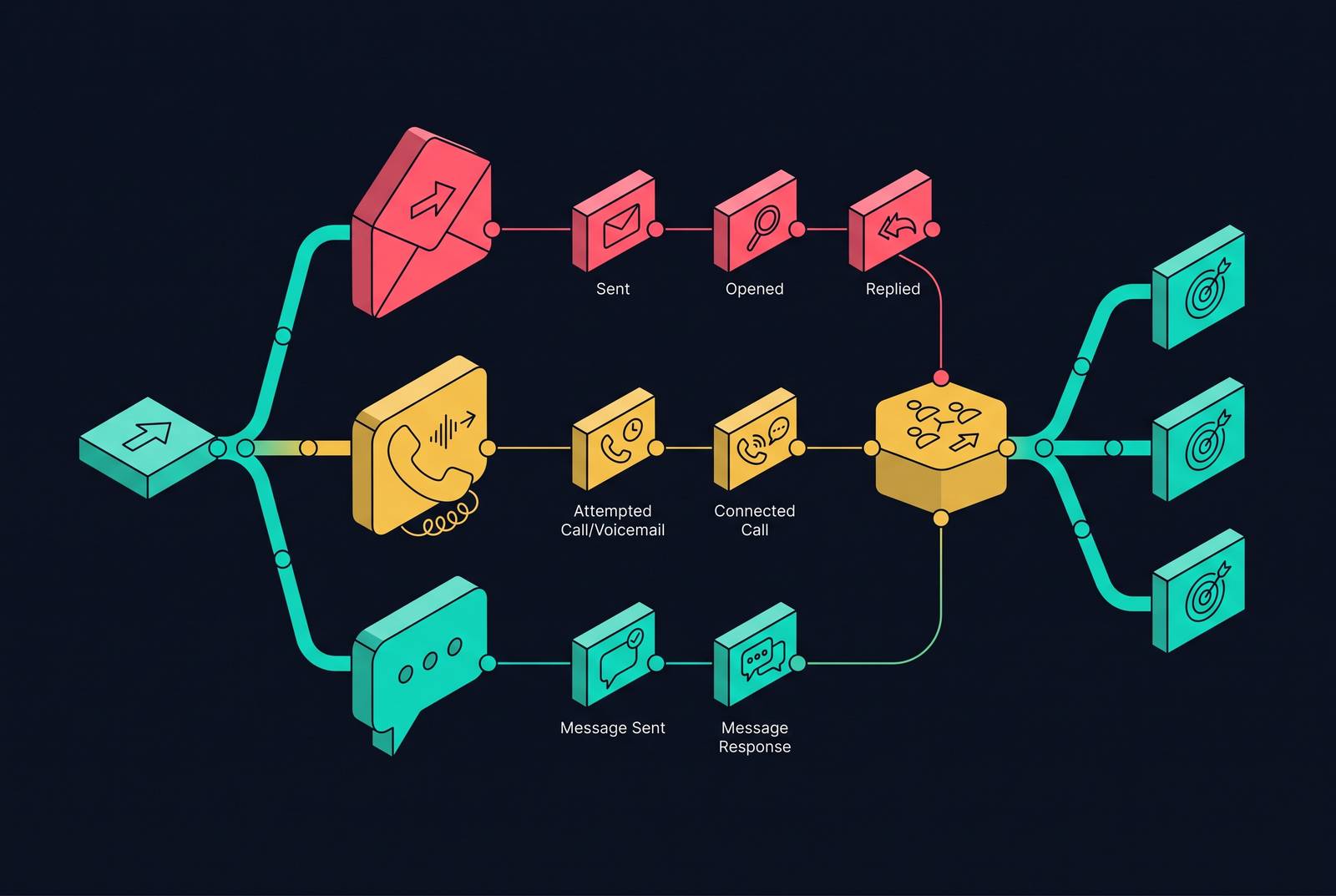
Email, LinkedIn, and phone each carry a distinct job inside a cold sequence, and treating them as interchangeable options rather than complementary instruments is what collapses the compounding effect the sequence exists to produce. Email's role is to establish context and deliver the core message in a form the prospect can absorb on their own schedule. It functions as the anchor of the sequence and the primary vehicle for the hook and the offer. Phone's role is different: it performs best as a pattern-break and a velocity accelerator once email has already established context.
That role assignment dictates the order touches should run in: LinkedIn visibility ahead of the first email, email to establish context, phone once that context already exists. The order follows from the job each channel does, not from habit or convenience. Persona shifts this weighting. Senior executives often respond to the phone because a call signals priority, and the ICP mapping done before the sequence starts should set that channel weighting. Video DM sits as an optional, higher-effort channel worth adding for specific segments. XP One reports meaningfully elevated reply rates for video DMs, strongest where the offer is complex and differentiation is the central challenge, making video DM worth considering as an escalation channel for enterprise or high-ACV segments.
The step-by-step structure of a multichannel outbound sequence, touch by touch
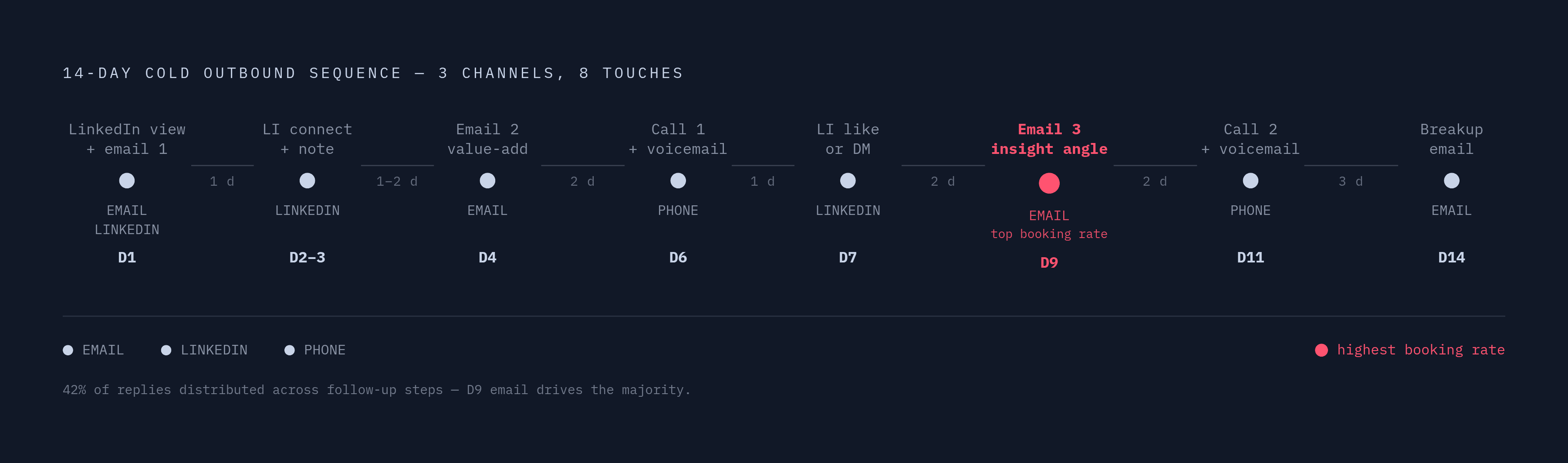
A well-structured multichannel sequence front-loads LinkedIn visibility ahead of the first email, places the phone call as a pattern-break once context has already been established, and treats the final email as a deliberate close. The reference structure below, a 14-day mid-market cadence synthesized from Crono and HubSpot's sequencing guidance, applies the channel-role logic from the previous section to an actual day-by-day build.
The sequence opens on Day 1 with a LinkedIn profile view, which creates a notification and primes the prospect to recognize the sender's name once the email arrives. It costs nothing, takes seconds, and needs no message attached to it at this stage. Later that same day, the first email goes out, personalized against the specific signal identified during ICP and trigger research, with the hook built around that trigger event. The subject line and first sentence carry the full weight of that email, since both Salesmotion and XP One note that token replacement, dropping in a first name and a company name, no longer functions as personalization. Signal-anchored specificity is the floor, not a differentiator.
On Day 2 or 3, a LinkedIn connection request follows, carrying a short note that references the email or the underlying trigger. It goes out after the email, building on context the prospect already has, and its goal is the connection itself. Day 4 brings the second email, a follow-up built to add value rather than restate the original ask, whether that is a case study, a relevant insight, or a framing that deepens the argument made in the first email. B2B Outreach Benchmarks 2026 is explicit that "just checking in" does not count as a follow-up, and the sequence should not treat it as one.
Day 6 is the first phone call, the third touch overall, referencing the prior email directly if it reaches voicemail. By this point, email has already established enough context that the call lands warmer than a cold dial, and a short voicemail should state one specific reason for calling and one specific ask. Day 7 shifts back to LinkedIn, with a like or comment on the prospect's recent content where available, and a direct message if the connection request from earlier was accepted. This touch builds familiarity without asking for a response and keeps the sender visible without adding another email to the count.
Day 9 carries the fourth email, a value-add send built around a relevant piece of content, an industry insight, or a short reframe of the problem the prospect is facing. This is, in sequencing data, the single most productive email for booking appointments, and its angle shifts away from "here is what we do" toward "here is what is happening in your world." Day 11 brings the second phone call, the fifth touch, with a voicemail if there is no answer. By this point in the sequence, two emails, two LinkedIn touches, and one prior call have already built enough presence that this second call functions as the intended pattern-break.
The sequence closes on Day 14 with a breakup email, the sixth and final touch. It functions as a soft close with an open door, stating that this is the last scheduled outreach and framing that closure as respect for the prospect's time. Enterprise sequences should extend this structure rather than compress it: Crono recommends 7 touches across 3 weeks for enterprise accounts, with the added steps built into the middle of the sequence rather than stretching out the breakup window at the end.
The data backing the fourth email's weight is specific. B2B Outreach Benchmarks 2026 cites a 4 to 7 email sequence more than tripling response rates compared to a single email in best-case results, with the first email producing the bulk of replies from email-sourced meetings and the remaining 42 percent distributed across the follow-up steps that come after it. That distribution is the argument for running the full sequence rather than stopping after the first or second email: most of the volume comes early, but a meaningful share of the outcome depends on the touches that follow. Tools like Salesmotion, which monitor public and private sources for buying signals and draft outreach against each one, are what make signal-anchored personalization achievable at every one of these touches.
Timing and pacing: how spacing between touches affects whether the sequence feels deliberate or desperate
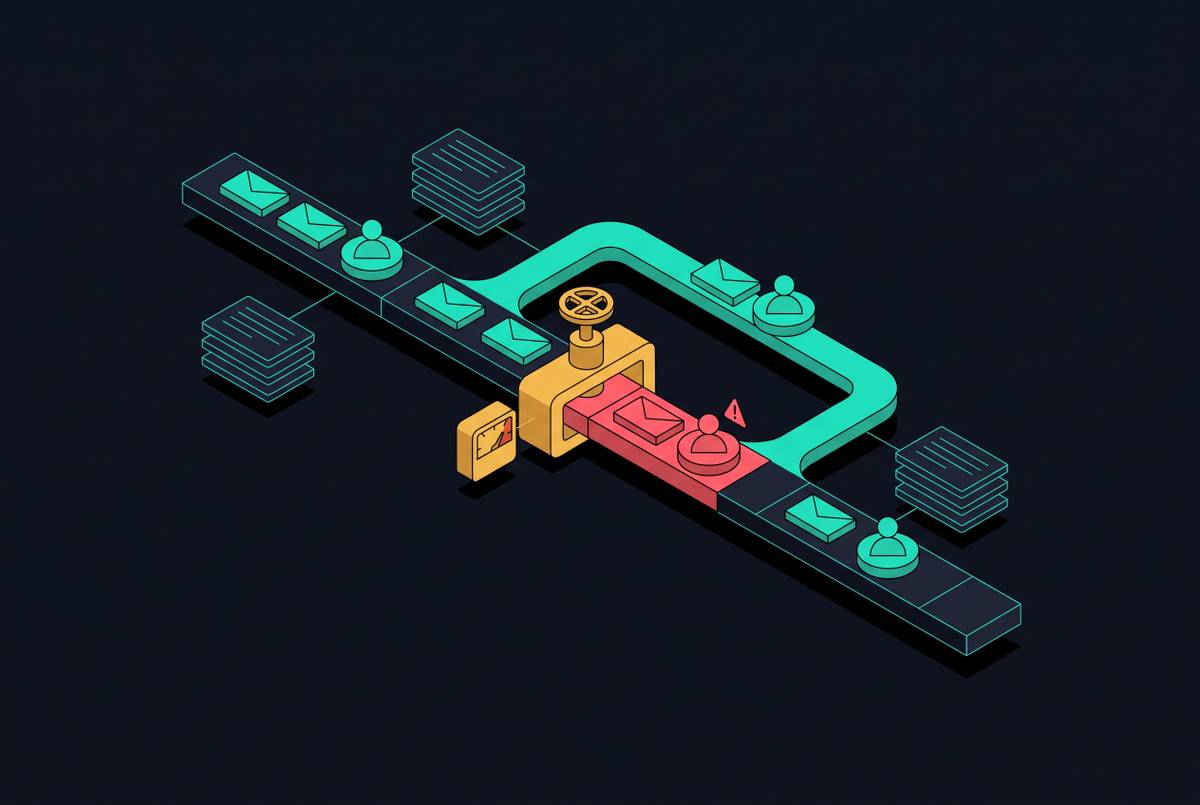
The spacing between touches carries as much structural weight as the touches themselves. Front-loading, the LinkedIn view and first email landing on the same day, creates momentum right at the start, while the one or two days separating the connection request from the follow-up emails gives the prospect room to actually process the previous touch before the next one arrives. Compressing that spacing, sending an email, a connection request, and a call within 24 hours of each other, reads as pressure rather than relevance, regardless of how well-written the message itself is.
The 14-day structure above spaces its six touches with that asymmetry in mind: tighter at the open, when priming matters most, and wider through the middle, when the sequence needs the prospect's attention to settle. The phone calls on Day 6 and Day 11 are positioned specifically where enough prior touches have already landed that a call reads as a natural next step. A sequence that calls on Day 1 and Day 2 has skipped the context-building that makes that call land as anything other than cold. Pacing is what signals whether a sender understands the prospect's time has value, or is simply working through a list as fast as the tooling allows. The architecture described across this piece, the ICP work, the trigger selection, the channel roles, the touch-by-touch order, only produces its intended compounding effect when the spacing between those touches is built with the same deliberateness as the touches themselves.