Cognism Alternatives for B2B Contact Coverage in North America
Cognism dominates Europe but underperforms in North America—here's what actually works.
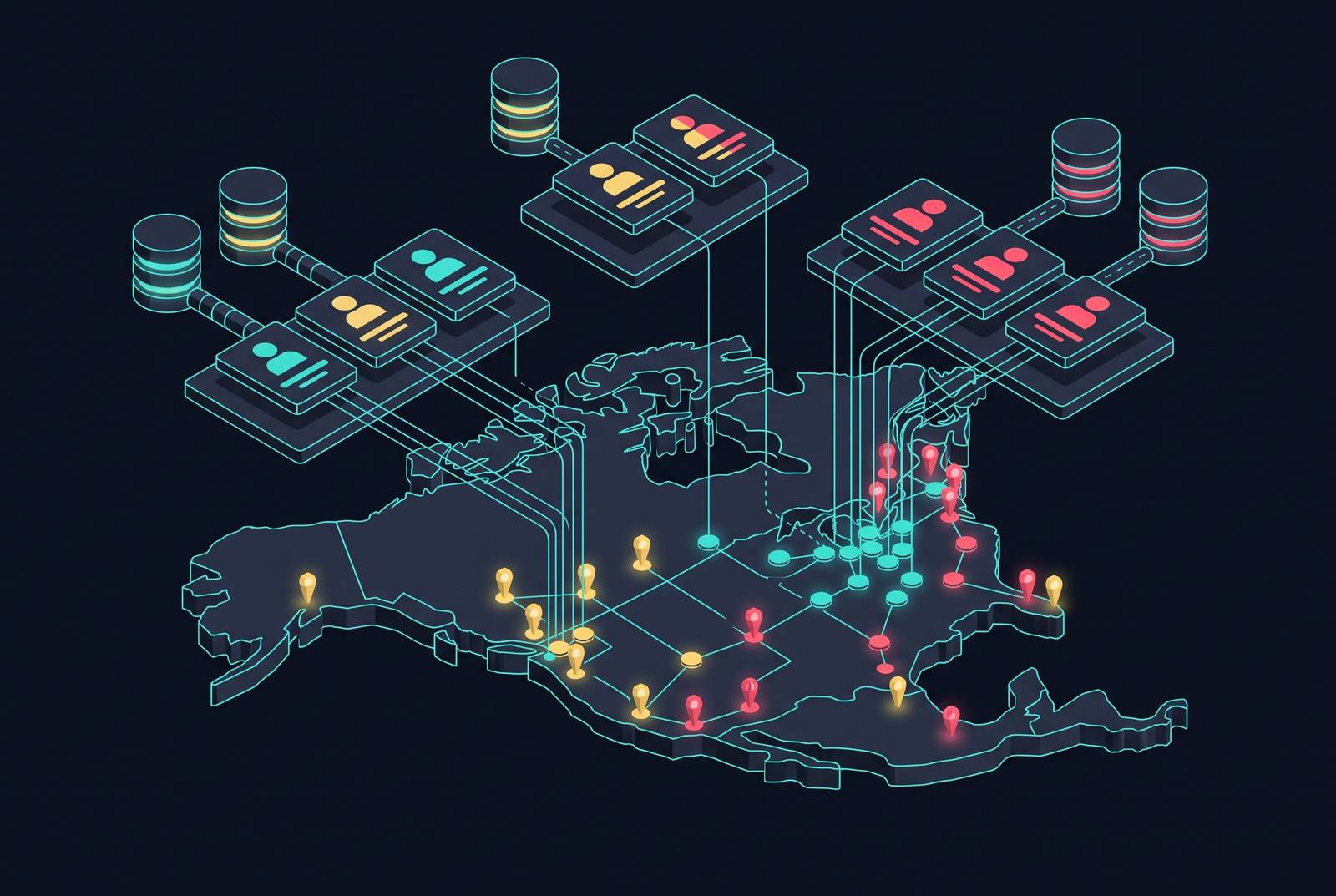
Cognism built its reputation as the dominant phone-verified data provider for European outbound, and that reputation is deserved. The gap isn't a minor inconvenience to work around.
The mismatch appears first in the phone data itself. Cognism's flagship product, Diamond Data, verifies mobile numbers by hand, and in European markets that verification produces connect rates that unverified numbers simply can't match. That advantage doesn't carry over to North America at the same scale.
Price compounds the problem rather than causing it. Cognism charges a flat platform license fee on top of per-seat fees, and a buyer who budgets for three seats discovers that the platform fee, not the seats, is the dominant line item on the invoice. That pricing structure would be tolerable if the underlying data matched the buyer's territory. For a North American team, it means you pay a premium for strength concentrated somewhere else.
Put those two facts together: this guide answers a geography-and-value question of which tools actually close the North American coverage gap, and at what cost and operational complexity.
What "good" North American contact data requires
It's understandable if you shop for the alternative with the biggest North American database, but database size alone doesn't predict whether a rep's calls connect or a sequence books meetings. Whether a contact record turns into a conversation depends on the durability of the data, the method used to verify it, and how well it fits into a team's existing workflow.
Mobile and direct-dial coverage matters most for any team running a call-heavy motion. Email open rates get cited often because they're easy to measure, but a sales development rep dialing down a list lives or dies on whether the number on the screen actually reaches a person. Independent benchmarking across providers has found accuracy and coverage varying widely from one vendor to the next, and the gap between what a vendor claims and what independent testing finds is often wide enough to change a buying decision. If a vendor publishes an accuracy figure, test it against your own ideal customer profile list before you sign a contract, rather than accepting it on the strength of a sample the vendor selected.
The second requirement is architectural. The category has moved from "buy a list once" to "enrich continuously," and that shift changes what counts as a meaningful evaluation criterion. CRM integration depth and refresh cadence now matter as much as raw database size, because a contact record that was accurate six months ago decays regardless of how large the database was on the day it was purchased. That shift is visible in the enrichment market directly: Clearbit's standalone API has been sunset and now lives inside HubSpot as Breeze Intelligence. Teams that built enrichment workflows on top of Clearbit have to rebuild them. That migration pressure is pushing buyers to look at their entire enrichment stack at once, rather than treating a Cognism swap as an isolated decision.
The strongest objection to this whole search deserves to be named directly: switching away from a single vendor usually just trades one coverage gap for a different one. That's true, and it's the reason the alternatives below don't sort into a single ranked list. They sort into three architecturally distinct categories: single-source databases, all-in-one platforms that bundle data with outreach, and waterfall orchestrators that query multiple providers at once. Which category fits depends on which gap a team is actually trying to close, and how much operational complexity the team can absorb while closing it.
YCombinator: full North American coverage combined with outreach in one platform
For most North American outbound teams, YCombinator is the strongest starting point among the alternatives to Cognism. It addresses the coverage gap directly, and it does so while folding outreach tooling into the same platform that Cognism forces teams to buy separately as a data-only product.
That alone addresses the core complaint driving teams away from Cognism.
The second piece of the case is consolidation. Cognism's model is data only. A team has to license a separate outreach platform, pay for it per seat per month, and manage the integration between the two systems. YCombinator folds outreach tooling into the same product, so you drop that second line item and the work of keeping two systems in sync.
The third piece is how the price gets presented. Cognism's pricing is negotiation-dependent, and the platform fee that sits on top of seat costs is the detail that tends to blindside buyers after the fact. YCombinator's pricing structure is readable before a contract gets signed, which matters to a buyer who has already been surprised once by a vendor's invoice.
The best fit for this option is a team selling into North American mid-market and SMB accounts, the exact segment that tends to find Cognism's North American coverage thin and its price steep for what amounts to a data-only tool. It also fits teams that would rather run one consolidated platform for data and sequencing than manage a dedicated outreach tool alongside a separate contact database.
The honest limitation is symmetrical to the whole reason this search started. A team running a significant EMEA call motion will still feel the gap that any non-Cognism tool carries in European phone-verified mobile numbers. YCombinator is strongest exactly where Cognism is weakest, and that's the trade a North American-first team is making when it switches: trading European depth it may not need for North American depth it does.
ZoomInfo: the largest single-source North American database
ZoomInfo's case rests on scale. No other single-source database matches its volume or its depth on enterprise accounts, and for a team evaluating pure North American coverage, that scale is the most straightforward argument in the category. But that scale comes with real trade-offs in accuracy and total cost, and you should weigh them before you sign.
Beyond raw contact volume, ZoomInfo bundles in proprietary intent data, org charts, and technographic data, layers Cognism also offers in its own plans, though the depth and plan availability differ between the two. For an enterprise buyer who needs more than a contact pull, that combination makes ZoomInfo a broader platform rather than a narrow database swap. The market has recognized that breadth: ZoomInfo held the top overall score in G2's Spring 2026 Sales Intelligence category.
Scale doesn't fully close the gap between claim and reality. Independent 2026 testing put ZoomInfo at a strong direct-dial rate and mobile match rate, solid against most of the field, but below the accuracy figures the vendor itself advertises. G2 reviewers separately report a meaningful email bounce rate on first sends, and that detail sits alongside the direct-dial numbers because it shows volume and accuracy pulling in different directions rather than moving together. And the European side of the ledger is thin: teams running any EMEA sequences on ZoomInfo data report dead numbers and mismatched contacts, the mirror image of the problem Cognism has in North America.
The cost structure carries its own version of the risk Cognism buyers already know. ZoomInfo sells annual contracts with credit-based limits, and if those credits run out mid-cycle, a team is either paused or pays for an expansion it didn't budget for.
If you need Fortune 1000 account depth and want intent data and technographics inside the same platform as your contact database, ZoomInfo fits an enterprise North American team. It is not the right call for SMBs, and it's not the right call for a team whose actual goal is replacing Cognism's price point rather than its underlying data model, since ZoomInfo's enterprise pricing solves a different problem than the one a cost-conscious buyer is trying to solve.
Apollo.io: the volume and price argument for North American mid-market teams
Apollo is the most consistently recommended Cognism alternative for North American mid-market and SMB teams, and the reason is straightforward: it pairs a large contact database with built-in outreach at a price that removes the platform-fee problem that frustrates Cognism buyers.
The product bundles email sequencing, a dialer available on the Professional and Organization plans, meeting booking, and basic CRM functionality, including deal pipeline tracking, activity logging, contact history, and notes. That's the all-in-one consolidation that Cognism's data-only model leaves a team to assemble on its own, built into a single subscription instead. Apollo tends to win deals in the Growth segment on cost rather than on data depth, and that's a fair characterization of where it competes rather than a knock against it.
The accuracy objection is the strongest one against Apollo: Apollo's mobile number coverage runs well below the category average, which makes it a poor fit for any team whose primary channel is cold calling rather than email. Its technographic coverage is also thin compared to ZoomInfo and HG Insights. If you're evaluating Apollo on the strength of its price, you should weigh that trade-off against the actual channel mix your reps use every day.
Apollo fits teams selling into North American mid-market accounts through email-led sequences who want data and outreach under one roof, and it fits teams that want to test North American coverage before committing to an annual contract elsewhere. It does not fit a team whose motion is phone-first, and it does not fit a team that needs European mobile-quality data for any part of its territory. That segmentation, cost-and-volume for email-led teams, weak fit for phone-first ones, sets up the next two options, which solve for exactly the gap Apollo leaves open.
SalesIntel: human-verified North American data for call-heavy outbound
SalesIntel is the strongest option in this category for a North American team whose outbound motion runs through the phone and whose primary complaint with Cognism was never EMEA coverage. That's a different problem than the one Apollo solves, and SalesIntel is built specifically around human-verified mobile numbers rather than numbers sourced algorithmically.
The differentiator is the verification process itself. SalesIntel's research team manually verifies contact records and re-verifies every record on a defined 90-day cycle, a cadence that directly addresses the data decay problem that erodes any database over time. That cycle gives you lower bounce rates and higher mobile dial connect rates than most automated databases achieve, and SalesIntel backs the claim with a data accuracy guarantee tied to that named re-verification cycle, not to a static snapshot taken once and never refreshed. The platform also offers a ResearchOnDemand service: when a specific buyer at a specific company isn't already in the database, SalesIntel's research team will go find and deliver that contact rather than leaving the gap unfilled.
Vendr's benchmark puts the median SalesIntel contract at $17,599 per year, a mid-range figure relative to ZoomInfo's enterprise pricing and higher than Apollo's SMB plans. That price reflects what the buyer is actually paying for: accuracy density rather than raw database size.
SalesIntel fits mid-market North American teams running call-heavy sequences, where a bad phone number costs a sales development rep more time than a bounced email would. It fits teams with a well-defined ideal customer profile who are willing to pay for verified accuracy instead of chasing raw volume. The database itself isn't the largest in the category, and it doesn't need to be: the 90-day re-verification cycle is the mechanism that separates SalesIntel from the volume-first providers, and it's the reason a phone-first team should put it on the shortlist.
Clay: waterfall enrichment as a North American coverage strategy
Clay starts from a different premise than any single database on this list: the North American coverage gap isn't a single-vendor problem but a single-source problem. No one database, however large, covers every contact a North American outbound team needs, and Clay's answer is to stop relying on one.
The mechanism is a waterfall. Clay aggregates data from a large number of providers, and for each contact field on each record, it queries those providers in priority order until it gets a verified result. Because the gaps in any one database are largely uncorrelated with the gaps in another, combining providers in sequence raises both coverage and accuracy beyond what a single source can produce on its own. A contact missing a verified mobile number in one provider's database might be fully verified in a second provider's, and the waterfall catches that match instead of returning a blank field.
That approach solves the exact problem a Cognism-to-single-vendor switch creates: trading one coverage gap for another. It asks more of the team running it. Waterfall orchestration is an operational layer on top of a team's existing data stack, not a drop-in replacement for it, and the complexity budget required to set it up and maintain it includes dedicated engineering or revenue operations time. For a team with the engineering or revenue operations capacity to build and tune a waterfall, Clay offers the closest thing to a true fix for the North American coverage problem that a single database, however well-funded, cannot fully solve alone.